
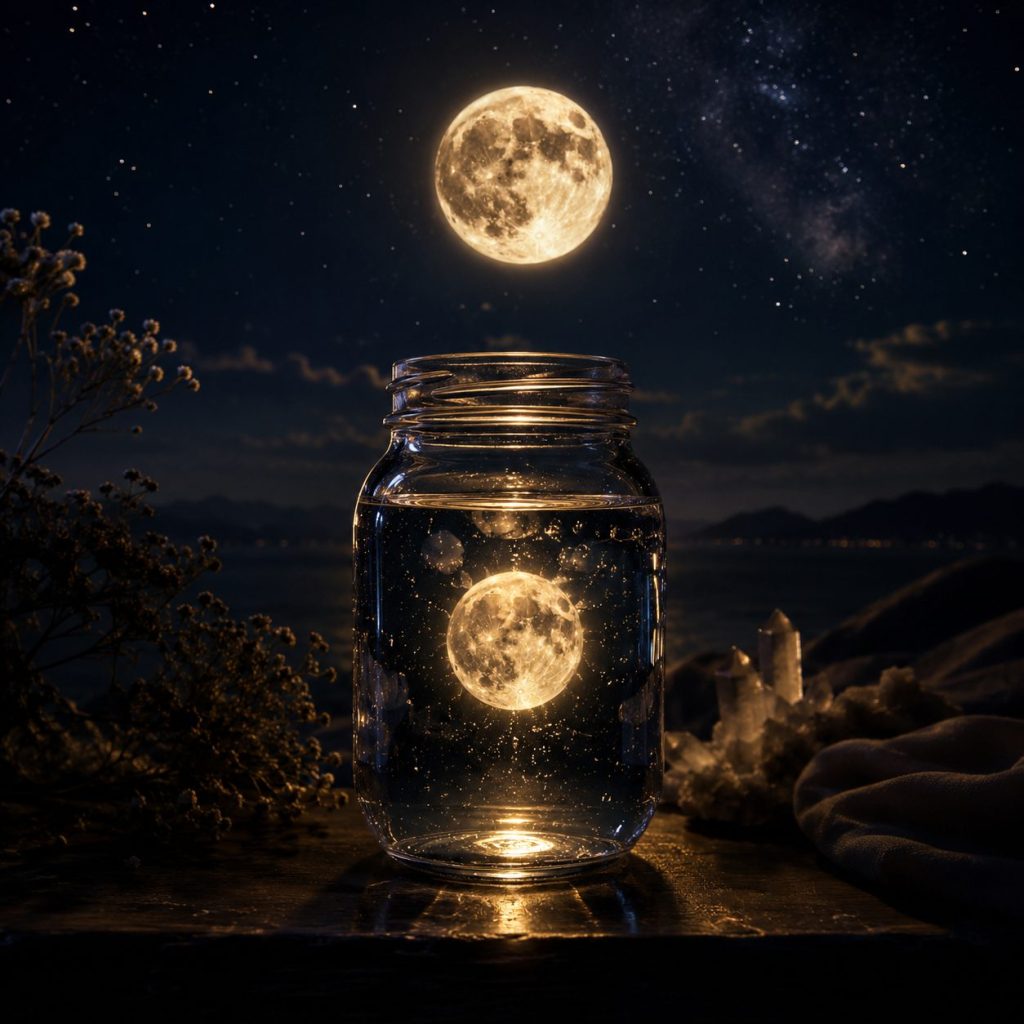
The moon has been a manifestation touchstone across cultures for longer than almost any other practice on this blog — indigenous gratitude ceremonies, pagan release rituals, and modern intention-setting all orbit the same 29.5-day cycle. 2026 gives you thirteen full moons to work with, including three supermoons, a Blue Moon in Sagittarius on May 31, and two lunar eclipses. Here is how to actually use that calendar.
New moon vs. full moon: two different jobs
The two halves of the lunar cycle are traditionally used for opposite purposes. The new moon, when the sky is darkest, is considered the moment to plant something new — writing down an intention, starting a practice, or naming a goal. The full moon, roughly two weeks later, is considered the visible high point of whatever was planted taking shape, which is why full moon rituals lean toward gratitude, completion, and release rather than starting something new.
Moon water: what it is and how people use it
Moon water is simply water left in a glass or jar under moonlight overnight, then used the next day. The specific phase you charge it under is thought to shape its use: new moon water for fresh starts and cleansing, waxing moon water for building momentum, full moon water (the most common) for amplifying an intention or blessing an object, and waning moon water for release work.
We will be upfront the way we always are on this blog: there is no controlled research showing moonlight measurably changes water’s structure or properties. What we do think is worth taking seriously is the underlying practice — the same cymatics and vibration principles we have written about elsewhere show that sound and frequency genuinely do interact with water in visible, physical ways. Moon water sits closer to ritual and intention than to demonstrated physics, and we think that is a fine thing for it to be, as long as it is understood that way.
Bringing your Resonator into a moon ritual
A simple, honest way to combine both practices: set your water under the moon overnight as usual, and the next morning, run your Resonator at a chosen frequency — 7.83Hz for a grounding, new-beginnings intention, or one of the chakra tones if you are working with something specific — with the water resting nearby during a short session before you drink it. You are combining a real, physically grounded vibrational practice with a much older ritual tradition. Neither one requires the other to be meaningful, but together they make for a genuinely full moon-cycle practice.
Your 2026 full moon dates at a glance
2026 brings thirteen full moons in total, including three supermoons and three micromoons, one Harvest Moon, one Blue Moon (May 31, in Sagittarius), and two lunar eclipses. Whichever specific dates you plan around, the practice itself matters more than precision: set an intention on the dark moon, and give it your attention again when the moon is full.